Data has become one of the most valuable assets for modern businesses. Yet, many organizations collect enormous amounts of information without knowing how to turn it into meaningful business outcomes.
A successful enterprise data strategy goes beyond collecting and storing information. It focuses on using data to improve decision-making, increase operational efficiency, support artificial intelligence, and unlock new revenue opportunities.
For CEOs, business executives, and technology leaders, developing a clear data strategy for business growth is essential to building a competitive advantage.
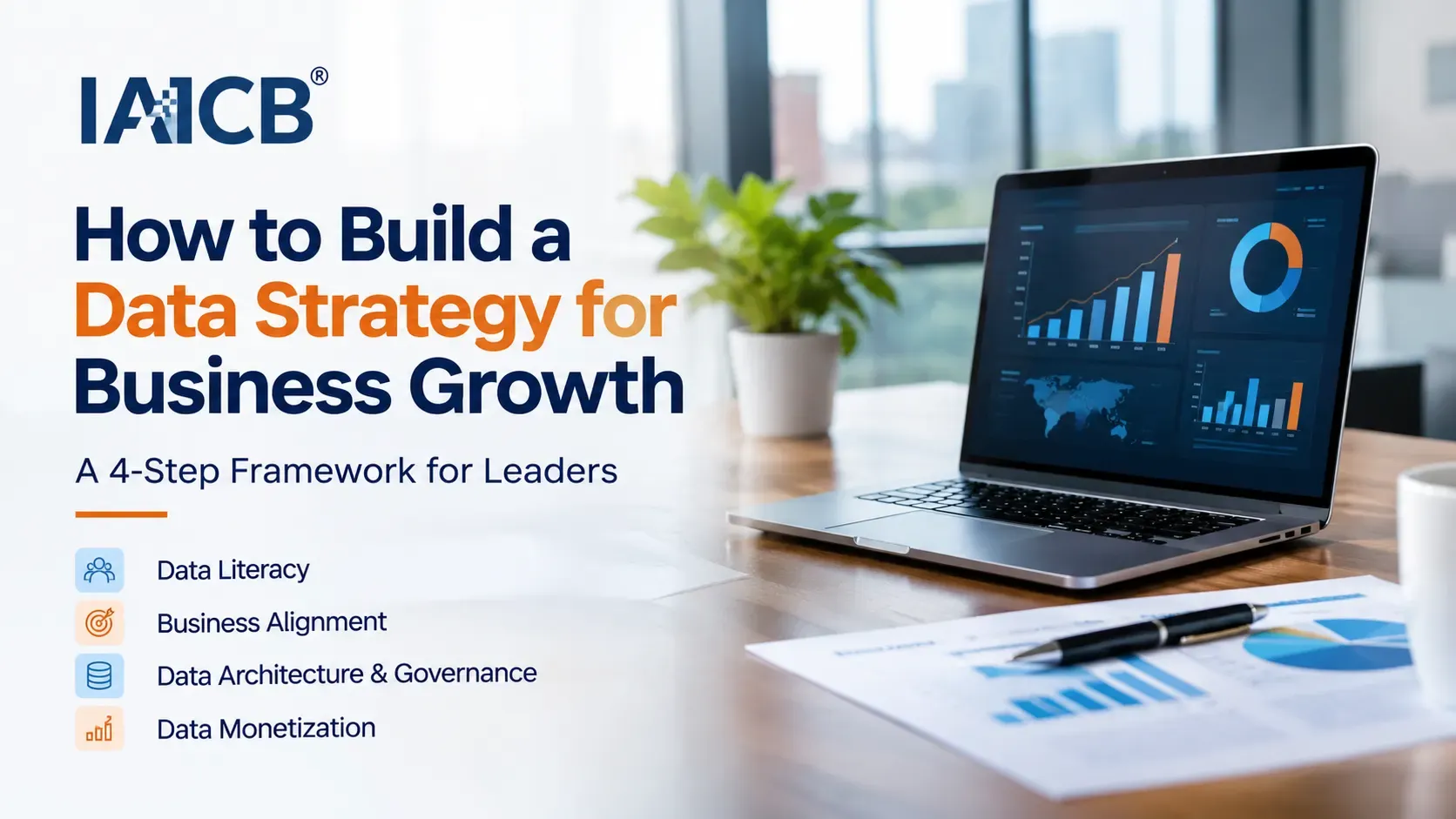
Here is a practical four-step framework to transform data into a strategic business asset.
1. Build Data Literacy Across Business Leadership
A strong data strategy begins with leaders who understand how to interpret and use information effectively.
Data literacy for executives is the ability to understand data, question analytical findings, and use insights to make informed business decisions.
Business leaders should focus on:
- Understanding key business metrics and performance indicators.
- Interpreting dashboards, reports, and analytical insights.
- Identifying opportunities for data-driven decision-making.
- Recognizing limitations, risks, and potential biases in data.
For example, a retail executive who understands customer purchasing patterns can make better decisions about inventory planning, marketing investments, and customer engagement.
Organizations that encourage data-driven leadership can make more informed decisions instead of relying entirely on assumptions or intuition.
2. Align Your Enterprise Data Strategy with Business Objectives
Collecting data without a clear business purpose often leads to unnecessary costs and disconnected initiatives.
An effective enterprise data strategy framework connects data investments directly to organizational goals.
Businesses should identify how data can contribute to:
- Revenue growth: Discovering new market opportunities and customer segments.
- Operational efficiency: Identifying bottlenecks and reducing unnecessary costs.
- Customer experience: Delivering personalized services and improving satisfaction.
- Strategic planning: Using predictive analytics to support future business decisions.
For example, a financial services company may use customer transaction data to improve fraud detection, while a manufacturing organization may analyze equipment data to predict maintenance requirements.
The objective is to ensure every major data initiative supports a measurable business outcome.
3. Establish Scalable Data Architecture and Governance
Even the most ambitious business strategy can fail when organizations rely on inaccurate, fragmented, or inaccessible data.
A strong data architecture and data governance framework establishes the foundation for reliable analytics and AI implementation.
Four important priorities include:
- Data Quality: Ensure information is accurate, consistent, complete, and regularly updated.
- Data Accessibility: Enable authorized teams to access relevant information without compromising confidentiality.
- Scalable Infrastructure: Develop systems capable of supporting growing data volumes and advanced analytics.
- Data Governance: Establish clear policies for data ownership, security, privacy, compliance, and responsible usage.
For organizations implementing artificial intelligence, high-quality data is especially important. AI systems depend on reliable information to generate useful insights and support effective decisions.
Investing in scalable data infrastructure helps businesses prepare for future AI adoption and digital transformation.
4. Unlock Growth Through Data Monetization and Partnerships
Data is not simply an operational resource; it can also create measurable financial value.
Data monetization strategies focus on generating economic benefits from data assets, either by improving internal operations or developing new products and services.
Businesses can create value through several approaches:
- Internal Data Monetization: Reduce costs and improve operational efficiency.
- Predictive Analytics: Improve forecasting and resource allocation.
- Data-Driven Products: Develop new analytics-based products or services.
- Data-Sharing Partnerships: Collaborate with trusted partners to create mutual value.
For example, a logistics company can analyze delivery patterns to optimize routes, reduce fuel consumption, and improve customer satisfaction.
Organizations may also explore data-sharing partnerships where appropriate legal permissions, privacy protections, and security controls are established.
A successful data monetization strategy focuses on sustainable business value rather than simply selling information.
Why Data Strategy Matters for AI Transformation
As businesses increasingly adopt artificial intelligence, the relationship between data strategy and AI strategy becomes more important.
AI applications require accessible, high-quality, well-governed data. Without these foundations, organizations may struggle with unreliable outputs, integration challenges, and limited returns on AI investments.
Business leaders who understand data governance, data architecture, analytics, and data monetization are better positioned to guide AI initiatives and support enterprise-wide transformation.
A well-designed data strategy therefore acts as a foundation for scalable and responsible AI adoption.
Frequently Asked Questions
What is a data strategy in business?
A data strategy is a structured approach to collecting, managing, analyzing, and using organizational data to achieve business objectives and create measurable value.
Why is data literacy important for executives?
Data literacy helps executives interpret information, evaluate business performance, identify opportunities, and make informed strategic decisions.
How can businesses turn data into a strategic asset?
Businesses can create value from data by improving data quality, establishing governance, implementing analytics, aligning data initiatives with business goals, and exploring responsible data monetization opportunities.
Conclusion: Turn Business Data into a Competitive Advantage
Building a successful data strategy for business growth requires more than investing in technology.
Organizations must develop data-literate leadership, align data initiatives with business objectives, build scalable data infrastructure, and identify opportunities to generate measurable value from information.
Businesses that approach data strategically are better equipped to make informed decisions, support AI innovation, and achieve sustainable growth.
Build the knowledge to turn data and artificial intelligence into meaningful business outcomes.
Develop the Skills to Lead Data-Driven AI Transformation
Understanding how data supports business strategy is becoming increasingly important for professionals responsible for AI adoption and enterprise transformation.
Explore the Certified AI Strategy Leader (CAISL) program by IAICB to learn more about enterprise AI strategy, data-driven leadership, AI governance, and strategic transformation.
Key takeaways
- Build data literacy so leaders can interpret metrics, question insights, and decide with evidence.
- Align every major data investment to measurable business goals — revenue, efficiency, experience, or planning.
- Establish scalable architecture and governance so analytics and AI rest on accurate, accessible data.
- Unlock growth through internal monetization, predictive analytics, data-driven products, and responsible partnerships.
- Treat data strategy as the foundation for reliable, scalable AI adoption.